Introduction: Moving Beyond the Party Trick
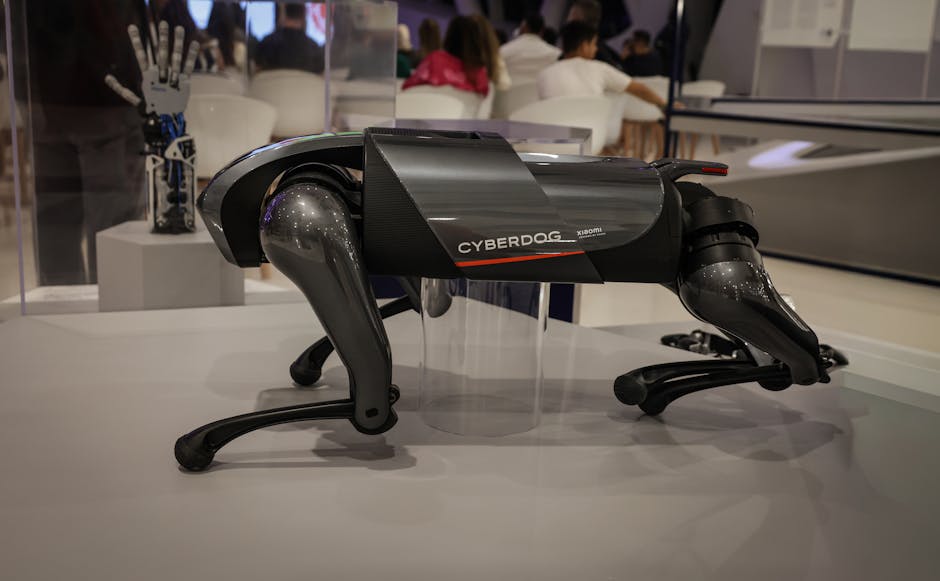
Let’s be honest: When Xiaomi first showed off the CyberDog and its successor, the CyberDog 2, the US tech community was impressed by the gymnastics, but skeptical about the utility. It was an awesome piece of engineering—it could do backflips—but the underlying question remained: “What, exactly, is this thing for?”
It was largely seen as a high-end tech demo, a cooler, more agile equivalent to Sony’s Aibo, but still primarily a rich person’s gadget.
However, rumors surrounding the third generation, the Xiaomi CyberDog 3, expected to drop sometime in late 2026, suggest a radical shift in philosophy. This isn’t just a sequel; it might be the first consumer-level quadruped robot designed for genuine, practical, daily interaction.
Based on leaks and Xiaomi’s recent tech advancements, here is our deep dive into why the CyberDog 3 could be the first robo-pet worth clearing space on your credit card for (and convincing your spouse that a robot companion is a necessary home investment).
1. The LLM Revolution: Contextual Awareness Arrives
 Photo by Tara Winstead on Pexels
The biggest rumored game-changer is the integration of Large Language Models (LLMs)—the same core technology that powers ChatGPT and Google Gemini—into the CyberDog’s core AI.
Previous robot generations relied on simple, often frustrating, command inputs (“Dog, sit,” “Dog, fetch”). The CyberDog 3, if leaks are accurate, will move into contextual understanding.
This means your interaction moves beyond basic commands and into actual conversation and task delegation:
- “The kids should be home soon. Can you watch the front door and notify me immediately when they arrive?”
- “Hey, I feel pretty down today. Cheer me up.” (With the possibility of generative AI creating a unique ‘personality’ for the robot, allowing for tailored emotional support.)
- “Go take a look around the house and make sure everything is secure.”
Suddenly, the robot dog transforms from a motorized pet into a roaming, four-legged smart assistant and personal security detail. For those who live alone, or who want serious security without the need for constant maintenance, this conversational capability is arguably the $2,000 price tag’s anchor feature. The robot is rumored to utilize enhanced NVIDIA AI chipsets to handle these complex generative tasks locally.
2. Automotive-Grade Sensing: Borrowing Tech from the SU7
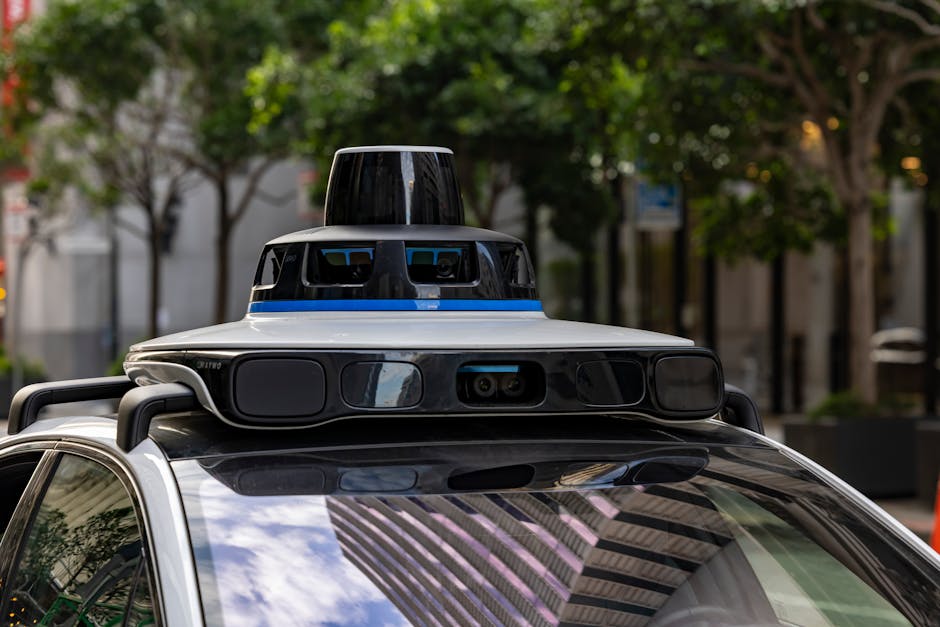 Photo by Stephen Leonardi on Pexels
Xiaomi is no longer just a phone company; they are now serious players in the electric vehicle (EV) market, notably with the successful launch of the SU7 sedan.
And guess what? They are planning to leverage that expensive, high-level autonomous driving tech for the CyberDog 3.
Rumors suggest the new model will feature Level 3/4 autonomous driving sensors, specifically incorporatingSolid-State LiDAR. This is a huge leap forward for domestic robotics navigation:
- Impenetrable Obstacle Avoidance: Unlike your typical Roomba, which might get trapped by a tangle of charging cables or a rug fringe, Solid-State LiDAR allows the robot to build a highly accurate, 3D map of the environment. It can navigate low-light conditions and crowded floors (like those found in many US homes) without getting hopelessly stuck.
- Superior Traversal: The chassis is also expected to get upgrades derived from EV suspension and movement algorithms, dramatically improving its ability to handle thresholds, steps, and uneven surfaces—transforming it from a showroom walker into a robot ready for real life.
If the CyberDog 3 can patrol a home autonomously, accurately identify objects and people using LiDAR, and communicate findings contextually using an LLM, it begins to rival dedicated, multi-thousand-dollar home security systems.
3. Solving the Battery Problem
 Photo by Tanha Tamanna Syed on Pexels
The Achilles’ heel of the CyberDog 2 was its severely limited battery life, clocking in at around 90 minutes of active use before needing to retreat to its charging dock. This short duration limited its utility mostly to short-term demos or supervised play.
The CyberDog 3 is expected to double or triple that duration, with predictions pointing toward 2 to 3 hours of continuous operation.
This increased stamina is crucial for unlocking the robot’s true potential as a utility device:
- It can run a complete security patrol cycle of a large house while the owner is at work.
- It can sustain longer periods of physical interaction and play with children.
- It provides a comfortable margin for returning to the charging station without immediate risk of power failure mid-task.
With a 2-3 hour window, the robot can easily manage complex routines: patrol the premises after 9 AM, perform a status check at noon, autonomously recharge, and then greet the kids when they return home from school.
Conclusion: The $2,000 Security Companion
The expected price point for the Xiaomi CyberDog 3 hovers around $2,000 USD.
While $2,000 is still a significant investment, when compared to its key competitors, it starts to look surprisingly compelling for the feature set:
- Sony Aibo: Retails for well over $2,800 USD and lacks the advanced security features, generative AI, and high-end automotive-grade sensors promised by the CD3.
- Boston Dynamics Spot (Enterprise): Priced well into the five figures, making it purely industrial/academic.
If Xiaomi can deliver on the combination of Solid-State LiDAR traversal, 2-3 hours of battery life, and true conversational intelligence powered by LLMs, the CyberDog 3 will carve out a new market niche: the attainable, high-utility, bleeding-edge robot companion.
For US tech enthusiasts debating whether this is worth the import hassle (assuming a lack of official US release), the answer looks increasingly like a tentative “yes.” If these rumors hold, the CyberDog 3 won’t just be doing backflips; it will be talking its way into our smart homes in late 2026.