The Standards War Heats Up: Why Xiaomi Is Eyeing 2026 for 6G Supremacy
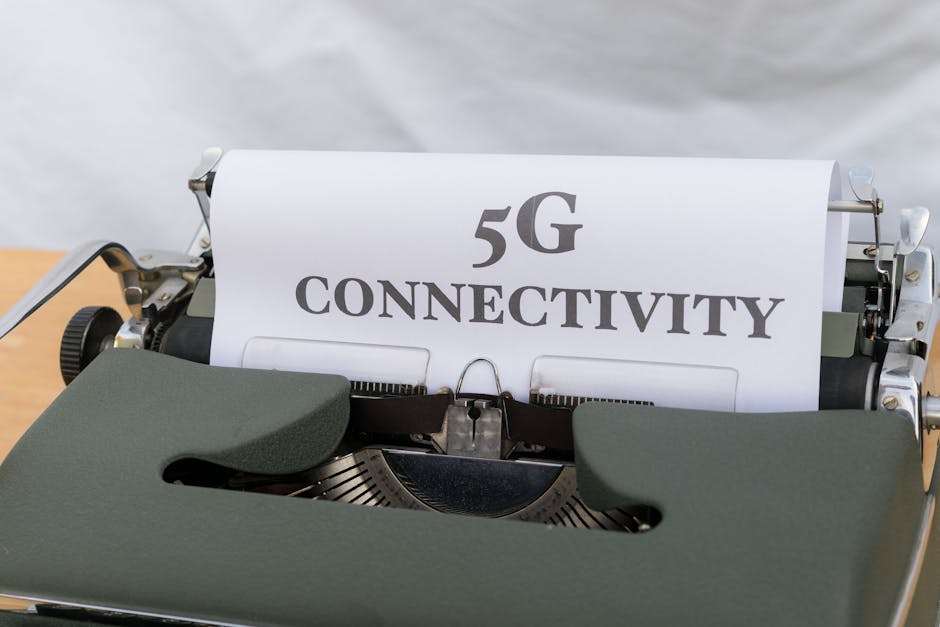 Photo by Markus Winkler on Pexels
If you’re a US tech enthusiast, you’re probably rocking a blazing-fast 5G device—maybe an iPhone 15 Pro, a Galaxy S24 Ultra, or the latest Pixel. 5G is finally mature, and network deployments are hitting serious speeds.
But in the high-stakes world of global mobile technology, resting on 5G laurels is a recipe for irrelevance. Even as 5G fills out the map, the titans of global telecom are already laying the foundation for 6G, and the key standards battles are happening right now.
Specifically, 2026 is shaping up to be the critical turning point where the final technical specifications for 6G will be locked in. While Apple and Samsung tend to wait for standards to settle, Chinese giants like Xiaomi are driving the specification process. And what they are prioritizing isn’t just raw speed—it’s solving the looming crisis of power efficiency.
This is a deep dive into Xiaomi’s ambitious 6G roadmap, detailing the technical breakthroughs they are pushing that could fundamentally change how long your next smartphone battery actually lasts.
The Race to Define the Standard: Xiaomi’s 2026 Strategy
 Photo by Abdulkadir Emiroğlu on Pexels
Xiaomi’s commitment to 6G isn’t a recent pivot. CEO Lei Jun publicly confirmed that the company began its preliminary 6G research way back in 2020. That’s a powerful statement: they started work on the successor technology right as 5G was finally going mainstream.
This early investment means Xiaomi is now a significant player in the crucial standardization process led by 3GPP (the group that defines global communication protocols).
Currently, 3GPP is hard at work finalizing the technical requirements and architecture for 6G, which is generally expected to hit markets in the 2028-2030 timeframe. Xiaomi is heavily involved in the standards setting, specifically contributing numerous proposals to the 6G RAN (Radio Access Network) working groups.
Their goal isn’t just to adopt the standard; it’s to ensure the resulting standard favors their unique hardware advancements, particularly in managing the energy drain that comes with terahertz communications.
The Killer Feature: Low-Voltage GaN Technology
As communication speeds push into the terahertz range, the amount of power required to maintain a connection skyrockets. Faster speeds invariably mean faster battery drain—a fundamental physical limitation.
Xiaomi believes they have found a potential escape route from this trade-off, and it centers on a major innovation called “Mobile Low-Voltage GaN (Gallium Nitride) Solution.”
Why This is a Game-Changer
While GaN is famous stateside for shrinking our charging bricks (thank you, Anker and Baseus), Xiaomi is doing something far more revolutionary: integrating GaN directly into the phone’s communications circuitry.
They are adapting GaN for the RF front-end—the complex stack of chips that handle receiving and transmitting signals.
Here’s why shifting from traditional silicon to low-voltage GaN inside the smartphone itself is massive:
- Hyper-Efficiency: GaN transistors suffer significantly less power loss than traditional silicon at high frequencies. This translates directly into more battery life for the end-user.
- Thermal Management: Less power loss means less wasted energy turning into heat. High-speed 6G activity will generate less overall thermal load, which is critical for maintaining performance (and avoiding the dreaded hot-phone syndrome during intense gaming or streaming).
- Space Savings: GaN components are inherently smaller. In a tight smartphone chassis, this saved space can be repurposed for larger battery cells, effectively delivering a dual benefit to overall endurance.
If Xiaomi can successfully scale this low-voltage GaN integration—which is a major engineering hurdle—they could be the first manufacturer to deliver a 6G phone with genuine all-day battery performance, solving the key usability problem before the technology even launches globally.
 Photo by Pascal 📷 on Pexels
Beyond the Grid: Making Dead Zones Extinct
The second pillar of Xiaomi’s 6G vision is solving the fundamental limitation of land-based networks: coverage gaps. Even with robust 5G infrastructure, you still hit dead zones in rural areas, mountains, or vast oceanic territories.
6G aims to eliminate the coverage gap entirely by creating a seamless mesh network that includes satellite internet.
Xiaomi is actively researching technologies to seamlessly integrate standard terrestrial 6G base stations with Low Earth Orbit (LEO) satellite communications. This technology is already being previewed in top-tier current devices (like the emergency satellite texting capabilities on the iPhone 15 series and the nascent satellite calling available in the Xiaomi 14 Ultra outside the US).
In the 6G era, this integration moves from a specialized emergency feature to a standard connectivity requirement. The resulting benefits are profound:
- Universal Coverage: Whether you are hiking the Appalachian Trail or cruising mid-ocean, you will remain connected.
- Disaster Resilience: If ground infrastructure is damaged (by natural disaster or attack), the satellite backbone keeps essential communications flowing.
Xiaomi’s investment here suggests that, within a few generations, never having service will become a relic of the past, significantly raising the baseline expectation for every flagship device.
The Post-Smartphone Era: What 6G Really Means for Consumers
Setting aside the technical specifications for a moment, what does Xiaomi’s future look like for the consumer? Their focus on low latency and power efficiency suggests a future where the actual form factor of our digital interaction changes completely.
Zero-Latency AR/VR Dominance
Xiaomi has been aggressively investing in smart glasses (like their Xiaomi AR Glass prototypes). The primary barrier to mainstream AR adoption is latency—the lag between a real-world movement and the digital overlay responding. 6G’s ultra-low latency makes Augmented Reality feel truly instantaneous. Imagine walking through an international airport where real-time translation and navigation prompts appear seamlessly right in your field of view, making the smartphone screen itself redundant for many tasks.
The Charge Cycle You Forget
The advances in GaN technology could dramatically boost the effective battery life. If power consumption is drastically lowered at the component level, we might move from agonizing over hourly drain to worrying about charging only every few days. While this is a hopeful prediction, Xiaomi’s focus on power efficiency rather than just speed is the most encouraging sign for users tired of battery anxiety.
Conclusion
Xiaomi’s 6G development strategy is exceptionally savvy. By focusing on the standards-setting process and pushing technological innovations like low-voltage GaN, they are not just preparing for the future; they are actively engineering it.
They recognize that while 6G speed is inevitable, the real competitive advantage lies in solving the fundamental physics problem of power consumption. The manufacturer that can deliver blazing fast, universally connected speeds without draining the battery in three hours will win the global flagship market.
While we likely won’t see true global 6G deployment until the late 2020s, Xiaomi’s current R&D suggests they are aiming to launch “6G-ready” devices much sooner. For US tech enthusiasts currently assessing imports or looking ahead to the next generation of global flagships, Xiaomi is defining what the future of connectivity looks like—and it might just be the most power-efficient generation yet.
Key Takeaways:
- 2026 is the crucial year for 6G standardization (3GPP).
- Xiaomi is pioneering low-voltage GaN integration into the phone’s RF front-end to combat 6G’s massive power draw.
- Satellite connectivity is positioned as a mandatory feature, aiming for universal “dead zone zero” coverage.